
The Benefits of Dry Sowing
Dry sowing offers the opportunity to maximise the growing season and benefits potential yield in spring. Early established forages will also offer the benefit of reducing pressure on your good, well-established perennial pastures, thus allowing them more opportunity to recover strongly.
In an operations and logistics sense, adopting dry sowing for at least some of your program may free up time later or prospects may be improved for timely contractor availability.
Do:
| Avoid:
|
Yield benefits from early establishment
A replicated trial with Vortex annual ryegrass was conducted at the Barenbrug Howlong Research Farm, ‘Shrublands’ in 2016. Vortex was sown at 2-week intervals from mid-March to mid-June, and the plots harvested when at appropriate bio-mass.
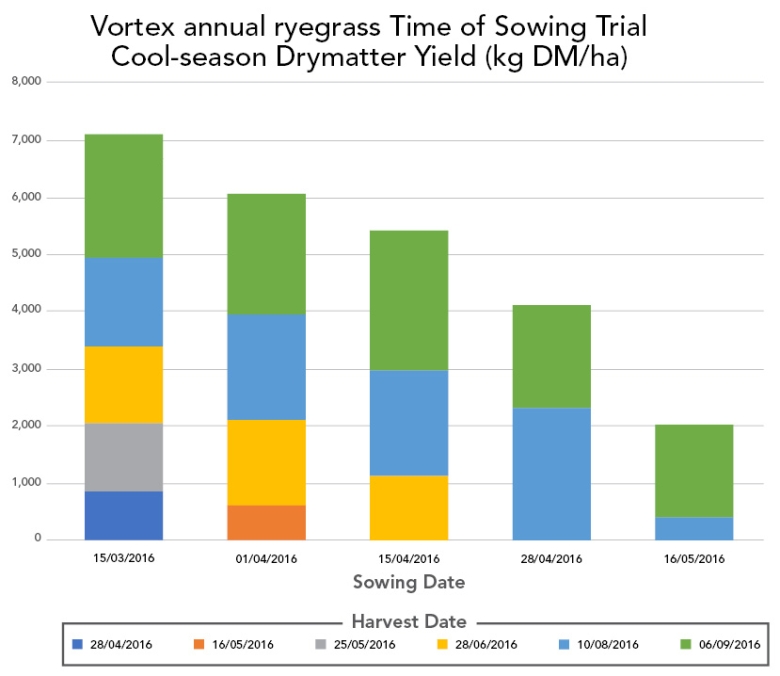
Each two-week delay in sowing was shown to reduce autumn, winter and early spring feed of Vortex annual ryegrass by around 1 tonne of dry matter with each later date.
Early establishment will allow prospects for maximising cool-season yield potential: valuable feed when it is most needed, an opportunity to reduce fodder feeding, and take pressure off valuable perennial pastures that are recovering from a long dry period.
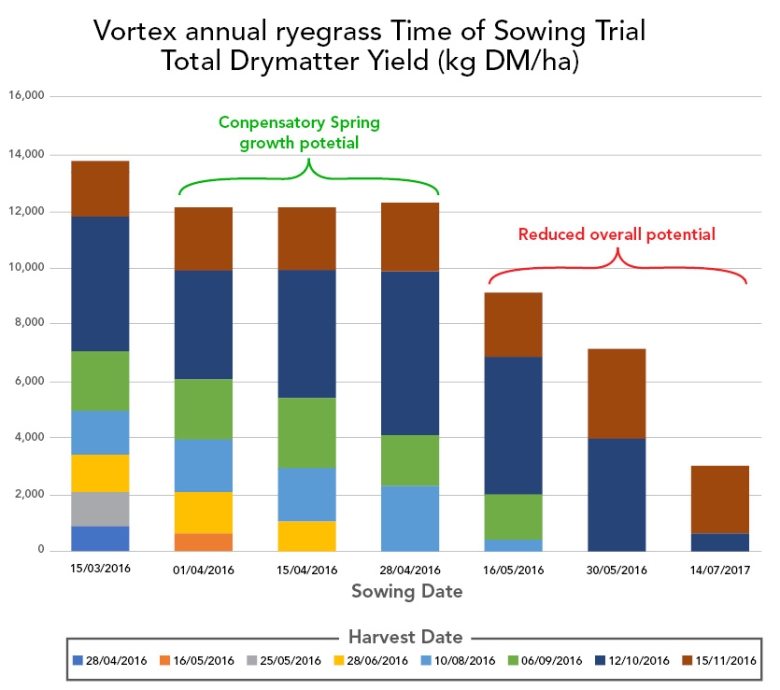
Mid-autumn sowing until around the start of May allowed the ryegrass to develop and tiller, thus offering similar overall total yield for the year.
Sowing times from mid-May saw a marked reduction in total yield as the plants had reduced development, and unable to develop their potential.
Which paddocks to choose?
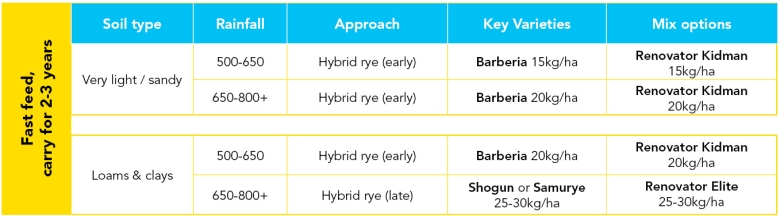
Dry sowing before the break limits herbicide options for the control of early-germinating weeds, therefore it is important to choose species with quick early-growth to assist with outcompeting (particularly) grass weeds. For suspected weedier sites, use the faster establishing annual and Italian ryegrasses and forage cereals and maintain higher sowing rates. For sites that may have reduced or limited grass-weed burden, consider using a hybrid ryegrass option as this should allow for 2-3 years’ production, thus reducing the requirement for re-sowing next year.
What to sow?
Whilst it may be tempting to use the lower priced annuals for the entire program, this may create a cyclical effect that could trap the producer into extensive, repeat sowing on an annual basis, which will also mean reduced feed volume on offer next summer and early autumn. Also consider the likely rainfall and the soil type. Lower rainfall and lighter soils will sustain lower populations of grasses and cereals, and they are likely to finish earlier in the spring. Higher rainfall and heavier soil types allow for extended spring growth potential and increased plant populations, so in these cases, keep the sowing rate higher and use later finishing varieties.
Dry sowing / fast feed options (500-800mm rainfall, winter dominant)
Very run-down, suspected high grassy weed burden
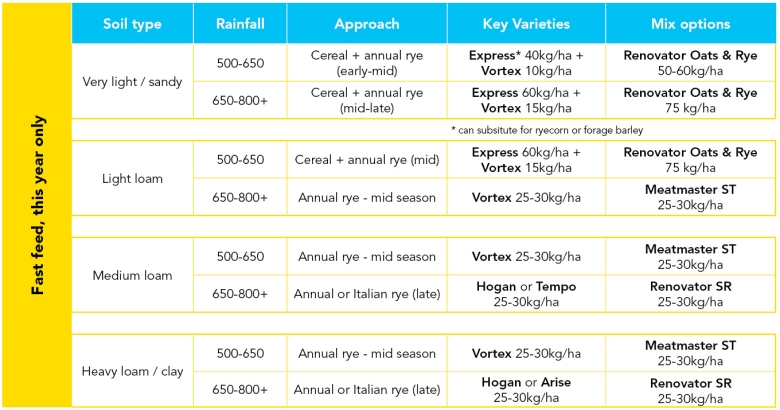
Run-out but relatively tidy for weeds / weed seed burden, re-sow in 2-4 years
Sowing method
Sowing into dry soils means that plants experience warmer soil conditions and good early vigour once adequate moisture is achieved. However, it is important to ensure that your seed is sown deep enough to protect it from drying out. For some species such as oats, aim to sow 10–15mm (approximately half an inch) deeper than the normal sowing depth to ensure adequate seed coverage. Dry sowing can be undertaken with your usual seeding machinery.
Other tips & things to consider
- Ryegrass and brassica germination is markedly reduced when soils are over 25ºC and will not reliably germinate at all when soil temperatures are over 30ºC.
Consider delaying your dry sowing until a time when soils are below 25ºC and the temperature trend is generally declining. - If the paddock is coming out of a cropping phase, reflect on the use of any residual herbicides in the previous program.
- There may be plant-back restrictions and residues that have a requirement for rainfall, in order for re-cropping intervals to be met.
- Fertiliser at sowing may sometime cause injury to seedlings due to a high salt index, which may be exacerbated by dry conditions.
Consider reducing the rate of fertiliser at sowing, changing the program to include an extra top-dressing or using sowing systems that place fertiliser away from the seed at planting. - As new seedlings germinate, they may be particularly targeted by pests such as snails, slugs and earth mites.
Slugs and snails may become active after a series of heavy dews. Monitoring and follow-up baiting may be critical.
Mites typically become active through April and May. - Consider using seed treated with Gaucho or Poncho and/or monitor for activity and respond promptly with an appropriate insecticide treatment.