
Beneficial Endophytes
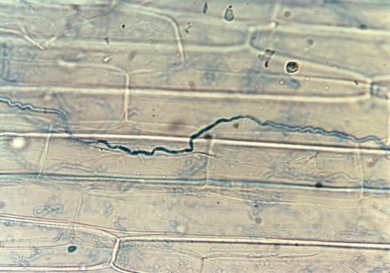
An endophyte is a fungus that lives naturally in a plant.
In the wild and cultivated areas there are many different grasses and endophytes, often they have a special and unique symbiotic relationship with each other.
The grass offers the fungus nutrient, a home and a method of multiplication and dispersal. The fungus gives the plant some protection from pests and over-grazing. The fungus produces chemicals (alkaloid toxins) of various type and varying concentrations. These toxins then offer the plant some protection from attack from insects and help to prevent the plant from being over-grazed when it is under stress, thus assisting the plant’s survival.
Naturally occurring ryegrasses and fescues usually have relatively high levels of these chemicals in the plant at certain times of the year, most notably when seed heads are developing in late spring, and in early autumn when coming out of summer dormancy. Ideally, we want to retain some of the endophyte characteristics that assist with the grass’ survival and tolerance to insect pests and other stressors, but we need to remove the animal health and productivity challenges. Plant breeders and mycologists have been discovering novel strains of endophyte and developing grass/endophyte varieties that seek to achieve this balance.
- How Endophytes May Affect Animals
Endophyte toxins can cause production losses as well as leading to potential injury or death of the animals. Even if the livestock do not seem to be under the effects of the endophyte, there may be sub-clinical effects that are lowering milk or meat production, without the animals seeming to suffer. In many situations, particularly where animals are being very intensively produced, the staggers and heat stress issues affect the economic performance of the farm to a point where other options should be considered and carefully taken up.
The main concerns with endophyte toxins manifest as ryegrass staggers (from the chemical Lolitrem-B) and/or heat stress (ergovaline). Lolitrem-B and ergovaline are found in wild-type endophyte populations of perennial and some hybrid rygrasses, and in tall fescue, there are no incidents of staggers, but potentially high levels of ergovaline. Lolitrem-B is a neurotoxin that may cause a rapid heart rate, tremors and loss of motor-control. With mild cases this may lead to productivity losses as the animals feed a little less or production rates decline through energy being used to eliminate the toxin. We refer to these as sub-clinical effects which may not be noticeable except as reduced rates of live-weight gain or milk harvesting. In more acute cases, animals may be seen to be twitchy, literally staggering or collapsing. Ryegrass staggers may lead to animals perishing through mis-adventure such as drowning or entanglement. Ergovaline is a vasoconstrictor thus limiting blood flow to the extremities of the body. Over a period of time, the toxin level builds up and may lead to heat stress when animals are less able to cool themselves due to the restricted blood flow. In extreme cases a condition known as ‘fescue foot’ may manifest where animals have severely restricted blood-flow to the lower legs, and lead to lameness or gangrene. Horses and cattle appear to be more readily affected than sheep. Similalrly to Lolitrem-B toxicity, low-levels of ergovaline toxicosis may exist and manifest as productivity losses.Peramine is a desirable compound that is found in ryegrass endophyte. There are no animal health implications and it assist with some insect control. Enhanced levels of peramine are usually desirable.
Lolines are found in tall fescue and meadow fescue endophytes, and similar to peramine, they offer some useful insect protection without creating animal health problems.
Janthitrems are found in some specific strains of ryegrass endophytes and offer excellent broadspectrum insect control, although may cause staggers in sheep under some circumstances.- Standard, Nil and Novel Endophytes
SE, meaning Standard Endophyte (formerly referred to as HE), is the term loosely used for all grasses with a normal, native, natural or wild-type endophyte. Available are Nil endophyte grasses (<5% endophyte) (also sometimes called WE - Without Endophyte) where the fungus has been allowed to die out in the seed. These offer terrific animal health benefits, but do not have the survival characteristics of SE grasses and, in many cases or environments, Nil endophyte grasses may not be as persistent. Novel endophytes are selections made to offer some of the benefits to the plant with lower levels of animal health problems. They have been brought to the seed market through a process involving a laboratory technique, by injecting the selected endophyte into nil endophyte plant seedlings, or in the case of NEA2, brought through with the grass breeding program.
Peramine is a desirable compound that is found in ryegrass endophyte. There are no animal health implications and it assist with some insect control. Enhanced levels of peramine are usually desirable.
Lolines are found in tall fescue and meadow fescue endophytes, and similar to peramine, they offer some useful insect protection without creating animal health problems.
Janthitrems are found in some specific strains of ryegrass endophytes and offer excellent broadspectrum insect control, although may cause staggers in sheep under some circumstances.
Beneficial Endophytes From Barenbrug

| Shogun, Forge (2025 release)• Contains the singular NEA2 endophyte strain |

| 4front, Array, Kidman, Rohan• Contains NEA2 and NEA6 endophyte strains |

| Maxsyn• Contains NEA2 and NEA3 endophyte strains |

| Samurye• Contains NEA12 endophyte strain |
AR1 | Governor• Contains AR1 endophyte strain |
Nil | Barberia• Contains no endophyte |